Supporting Our Hidden Heroes
First responders and military service members dedicate their lives to protecting others. Every day, they respond to emergencies, witness tragedy, and make life-or-death decisions under intense pressure. The emotional toll of these experiences can accumulate in ways that are often invisible to the public. While these professions require incredible resilience, the reality is that many who serve face significant mental health challenges, including issues related to first responder mental health. According to PTSD statistics for first responders, a substantial number struggle in silence, highlighting the need for support organizations like the Guardian Goose Foundation.
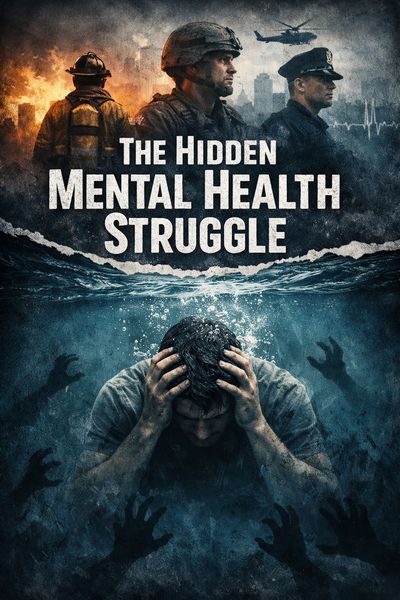

First Responder Mental Health
Research shows that first responders experience significantly higher rates of mental health conditions than the general population.
- Approximately 30% of first responders develop behavioral health conditions such as depression, anxiety, or post-traumatic stress disorder (PTSD).
- By comparison, about 20% of the general population experiences similar mental health conditions.
- Studies suggest that 85% of first responders report symptoms related to mental health challenges during their careers.
These numbers represent thousands of firefighters, police officers, EMTs, and paramedics carrying emotional burdens that are often never discussed openly.
Trauma & PTSD
Exposure to traumatic events is a routine part of the job for many first responders.
- Studies estimate that 18–33% of first responders experience PTSD at some point in their careers.
- A large global analysis found that roughly 1 in 7 first responders show signs of PTSD related to their work.
- In some professions, such as firefighting and EMS, PTSD rates can be three to five times higher than in the general population.
These repeated exposures to trauma, fatal accidents, violence, medical emergencies, and disasters, can lead to chronic stress, emotional exhaustion, and long-term mental health challenges.
Preventing Responder Loss
One of the most concerning aspects of the mental health crisis in public safety is suicide.
- Firefighters and law enforcement officers are more likely to die by suicide than in the line of duty.
- An estimated 100 firefighters die by suicide each year in the United States.
- Some studies have found that nearly half of firefighters have experienced suicidal thoughts at some point in their lives.
These statistics highlight the urgent need for better support systems, early intervention, and open conversations around mental health.
Supporting Families
Mental health challenges do not affect only the individual wearing the uniform.
Spouses, partners, and children often feel the ripple effects of stress, trauma exposure, and emotional exhaustion. Long hours, shift work, and repeated exposure to traumatic events can strain relationships and create emotional distance within families.
Families are often the first to recognize when something is wrong, yet many do not have the tools or support systems to help navigate these challenges.
Supporting families is a critical part of addressing mental health in first responder and military communities.
Breaking the Silence
Despite the risks, many first responders hesitate to seek help.
The culture within public safety professions has traditionally emphasized toughness, self-reliance, and pushing through adversity. While these qualities are essential in emergency situations, they can also create barriers to seeking mental health support.
Many first responders worry that speaking openly about mental health could impact their careers, reputation, or standing within their department.
As a result, many suffer quietly until they reach a crisis point.
Why It Matters
When the people who protect our communities struggle in silence, everyone is affected.
Healthy first responders and service members are essential not only for public safety, but also for strong families and resilient communities.
Breaking the stigma surrounding mental health is one of the most important steps toward ensuring that those who serve have the support they deserve.